When planning an HDPE pipeline project, one of the first questions contractors, engineers and project managers ask is: How much will the pipeline cost?
There is no single price for an HDPE pipeline cost in South Africa . The final project cost depends on several factors, including pipe size, pressure rating, fittings, welding, installation, site conditions, transportation and project requirements. Therefore, comparing suppliers based only on the price of the pipe can give an incomplete picture of the actual project cost. Understanding the different cost factors can help project teams prepare more accurate budgets and avoid unexpected expenses.
1. Pipe Diameter
Pipe diameter is one of the major factors affecting material cost. Larger-diameter HDPE pipes generally require more material to manufacture and can therefore cost more than smaller-diameter pipes. The required diameter depends on the pipeline’s design flow rate, velocity, pressure requirements and application. For example, a pipeline designed to transport large volumes of water or slurry may require a substantially larger diameter than a smaller utility or process-water line.
2. Pressure Rating and SDR
The required pressure rating also affects the amount of material used in the pipe. HDPE pipes are available in different pressure classes and SDR configurations. A pipe designed for higher operating pressures generally requires a greater wall thickness. The correct pressure rating should be selected based on the pipeline’s operating conditions and engineering requirements. Choosing a pipe solely because it has a lower purchase price can create problems if it does not meet the project’s design requirements.
3. Pipe Length and Quantity
The total quantity of pipe required has a direct effect on material costs.
However, the project should also account for additional pipe required for:
- Connections
- Changes in direction
- Equipment connections
- Repairs or future maintenance
- Site-specific adjustments
- Installation requirements
Accurate quantity calculations can help reduce material shortages and unnecessary over-ordering.
4. HDPE Fittings
An HDPE pipeline requires more than straight pipe.
Depending on the design, the project may require:
- Elbows
- Tees
- Reducers
- Bends
- Flanges
- Backing rings
- Stub ends
- Valves
- Electrofusion fittings
- Custom-fabricated components
The number, size, pressure rating and type of fittings required can significantly influence the overall project cost. Complex pipeline layouts may require more specialised fittings and fabrication.
5. Custom HDPE Fabrication
Some projects cannot rely entirely on standard fittings. Custom-fabricated HDPE components may be required to accommodate specific angles, dimensions, connections or site conditions.
Fabrication costs can depend on:
- Component size
- Design complexity
- Material requirements
- Number of joints
- Fabrication time
- Drawing and dimensional requirements
- Inspection and quality-control requirements
Early identification of custom fittings can help prevent delays and unexpected costs later in the project.
6. HDPE Welding and Jointing
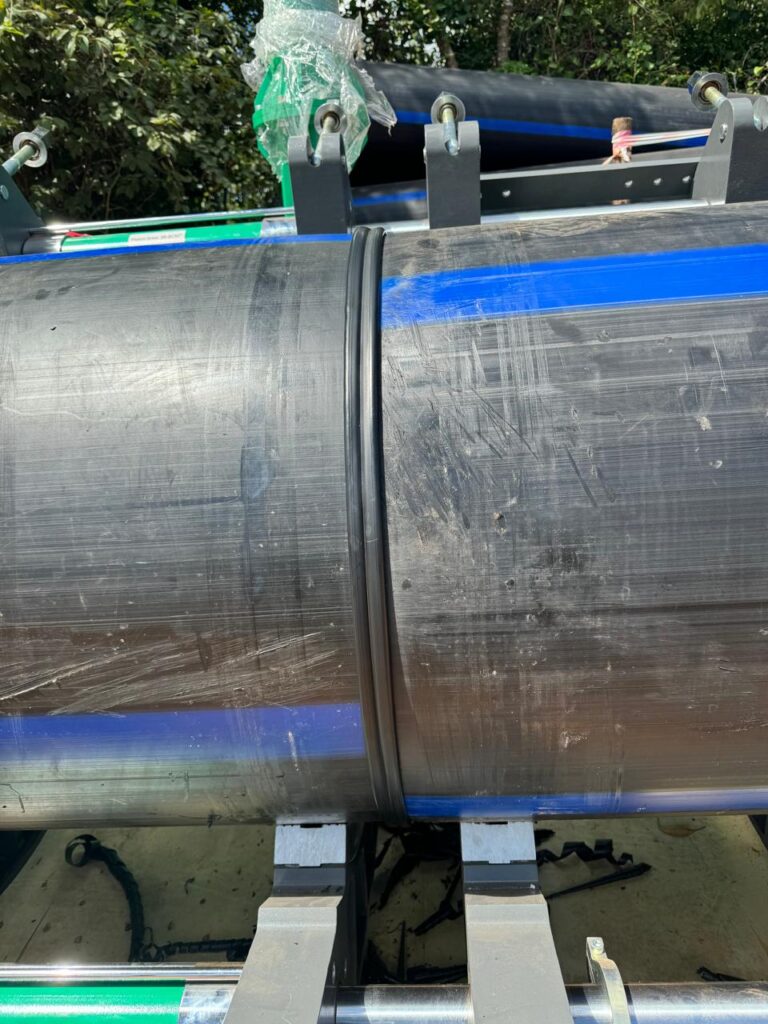
Welding is another important cost component. Depending on the pipeline design, joining may involve butt fusion, electrofusion or other thermoplastic welding methods.
The project cost can include:
- Welding equipment
- Skilled welding personnel
- Site preparation
- Joint preparation
- Consumables and fittings
- Inspection
- Weld documentation
- Equipment mobilisation
The number of joints and the pipe diameter can also affect the amount of time required for welding.
7. Pipeline Installation
The cost of supplying the pipe is only one part of the project. Installation may involve excavation, bedding, pipe handling, stringing, welding, backfilling, testing and reinstatement. Installation costs therefore depend heavily on the scope of work and the conditions at the project site. A project requiring extensive excavation and difficult access will have different installation requirements from a pipeline installed through an accessible area with prepared infrastructure.
8. Site Conditions
Site conditions can have a major effect on installation costs.
Factors may include:
- Rocky or difficult ground
- Uneven terrain
- Steep slopes
- Existing infrastructure
- Waterlogged areas
- Limited site access
- Long installation distances
- Environmental requirements
- Traffic or operational restrictions
Mining and remote infrastructure projects can present particularly challenging site conditions. These factors should be assessed during project planning rather than after installation has already started.
9. Transportation and Logistics
HDPE pipes can be supplied to projects across large geographical areas, making logistics an important consideration.
Transportation costs can depend on:
- Distance from supplier to site
- Pipe diameter and length
- Quantity ordered
- Delivery frequency
- Site accessibility
- Loading and unloading requirements
For projects in remote areas, transportation can represent a significant part of the overall project cost. Working with a supplier that has appropriate stock locations and delivery capabilities can help simplify logistics planning.
10. Pressure Testing and Quality Control
Pipeline testing and quality control should also be included in the project budget.
Depending on project requirements, costs may include:
- Pressure testing
- Inspection
- Welding records
- Test documentation
- Equipment calibration
- Independent certification where required
These activities help verify that the installed pipeline meets the required project specifications before commissioning.
11. Project Location
Location can influence several different cost categories at the same time. A project in Limpopo, for example, may have different transportation, labour, access and site requirements from a project in Gauteng or another region. This is why an accurate HDPE pipeline quotation should consider the actual project location rather than relying only on a standard pipe price.
12. Project Design and Complexity
A simple straight pipeline is generally easier to plan and install than a complex network containing numerous branches, changes in direction, equipment connections and pressure requirements.
The complexity of the pipeline can affect:
- Number of fittings
- Welding requirements
- Fabrication
- Installation time
- Testing
- Labour
- Equipment requirements
Good planning can help identify these requirements before procurement begins.
How to Get a More Accurate HDPE Pipeline Cost
Instead of asking only for the price of HDPE pipe per metre, provide the supplier with as much project information as possible.
Useful information includes:
- Pipe diameter
- Required pressure rating
- Total pipe length
- Application
- Fitting requirements
- Pipeline drawings
- Site location
- Installation requirements
- Welding requirements
- Testing requirements
- Required delivery schedule
The more complete the project information, the easier it is for a supplier to prepare a realistic quotation.
HDPE Pipeline Solutions in Limpopo and South Africa
Arrant Wise supplies, fabricates and installs HDPE pipeline systems for mining, municipal, industrial, agricultural and infrastructure projects.
Our capabilities include:
- HDPE pipe supply
- HDPE fittings
- Custom fabrication
- Butt fusion welding
- Electrofusion welding
- Thermoplastic welding
- Pipeline installation
- Technical support
- Pressure testing
We support projects in Limpopo and across South Africa.
Final Considerations
The cost of an HDPE pipeline is determined by much more than the price of the pipe itself.
Pipe diameter, pressure rating, fittings, fabrication, welding, installation, site conditions, transportation, testing and project complexity can all influence the final cost.
For this reason, project teams should evaluate the complete pipeline solution rather than comparing pipe prices alone. Early planning and accurate project information can help suppliers provide more reliable quotations and help contractors identify potential costs before work begins.
Contact Arrant Wise for HDPE pipes, fittings, fabrication, welding and pipeline installation services across South Africa.